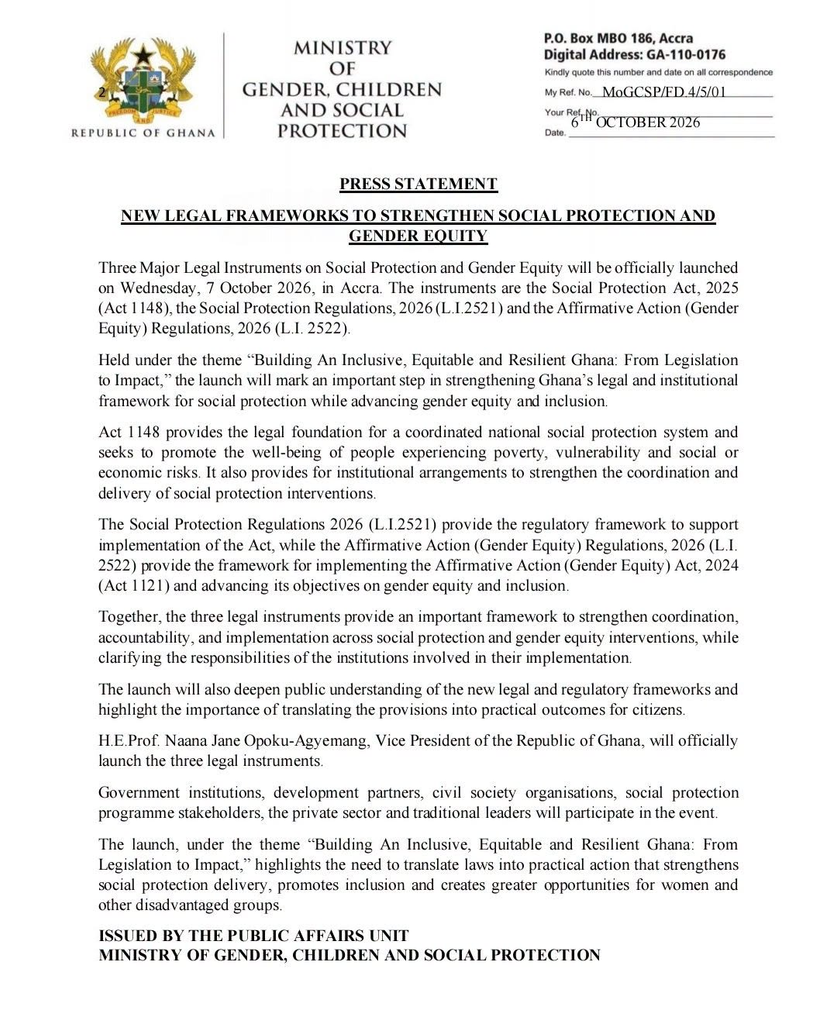

Ghana is set to launch three new legal instruments aimed at strengthening the country’s social protection system and advancing gender equity and inclusion.
The instruments — the Social Protection Act, 2025 (Act 1148), the Social Protection Regulations, 2026 (L.I. 2521) and the Affirmative Action (Gender Equity) Regulations, 2026 (L.I. 2522) — will be officially launched on Wednesday, October 7, 2026, in Accra.
Vice President Prof. Naana Jane Opoku-Agyemang will lead the launch, which is being held under the theme: “Building an Inclusive, Equitable and Resilient Ghana: From Legislation to Impact.”
The Ministry of Gender, Children and Social Protection says the new legal frameworks are intended to improve coordination, accountability and implementation across Ghana’s social protection and gender equity interventions.
The Social Protection Act, 2025 (Act 1148) establishes the legal foundation for a coordinated national social protection system, with a focus on promoting the wellbeing of people experiencing poverty, vulnerability and social or economic risks.
It also provides institutional arrangements to improve the coordination and delivery of social protection interventions.
The Social Protection Regulations, 2026 (L.I. 2521) provide the regulatory framework for implementing the Act, while the Affirmative Action (Gender Equity) Regulations, 2026 (L.I. 2522) provide the framework for implementing the Affirmative Action (Gender Equity) Act, 2024 (Act 1121).
Together, the three instruments are expected to clarify the responsibilities of institutions involved in social protection and gender equity programmes and strengthen implementation across the sector.
The Ministry says the launch will also provide an opportunity to deepen public understanding of the new legal and regulatory frameworks and emphasise the need to translate the laws into practical outcomes for citizens.
Government institutions, development partners, civil society organisations, social protection programme stakeholders, the private sector and traditional leaders are expected to participate in the launch.
The Ministry says the new frameworks are ultimately intended to strengthen social protection delivery, promote inclusion and create greater opportunities for women and other disadvantaged groups.