
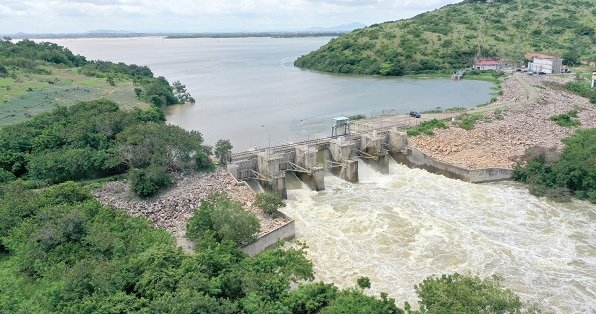

Ghana Water Limited (GWL) will resume controlled spillage from the Weija Dam on Wednesday, September 9, and has directed residents living downstream of the dam to evacuate ahead of the operation.
The directive follows a rise in the dam’s water level to 45.2 feet, bringing it close to the 46-foot threshold at which GWL says spillage becomes necessary to safeguard the dam.
The company attributed the increase to heavy rainfall upstream and continued rains across the catchment of the Densu River and its tributaries.
Communities identified as potentially affected include Tetegu, Oblogo, Pambros Salt, Lower McCarthy Hill, Lower Weija, Bojo Beach and Ada Kopey, as well as surrounding areas.
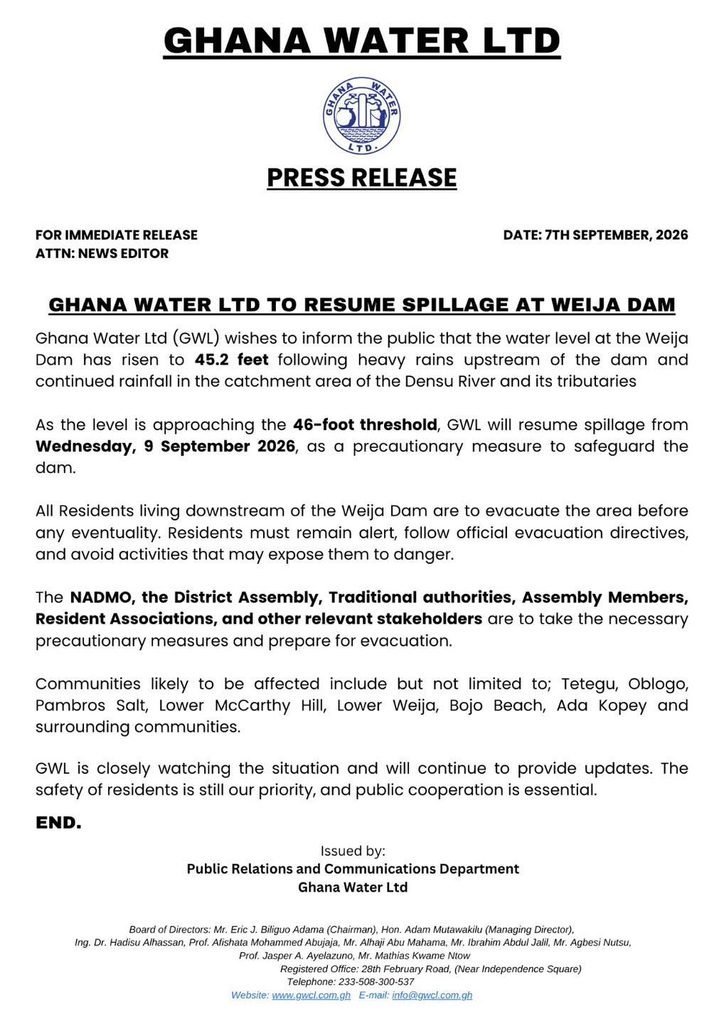
GWL has urged residents in these communities to comply with evacuation directives, remain alert and avoid activities that could expose them to danger.
GWL Chief Manager and Head of Public Relations, Stanley Martey, said the operation will proceed despite reports that some residents are reluctant to leave their homes.
Speaking on Joy FM’s Midday News on Tuesday, Mr Martey said authorities had given residents, particularly those living in unauthorised settlements along the river course, sufficient notice to relocate.
“Yes, we will go ahead with it. We have given enough notice,” he said.
He explained that the operation would initially be carried out on a limited scale, with one spill gate opened, but additional gates could be opened if the volume of water flowing into the dam continues to increase.
The duration and intensity of the spillage cannot yet be determined, he said, because they will depend largely on rainfall and inflows into the dam.
Mr Martey stressed that the exercise is not a new development but a continuation of the dam’s routine management during periods of high inflows.
“It is just a resumption and not like a new thing. Since the beginning of the year, we’ve been spilling excess water from the dam,” he said.
The renewed warning comes months after GWL raised concerns about human activity along the Densu River and the Weija Dam’s buffer zone.
In June, Mr Martey said flooding in the area was being worsened by settlements and other structures within the river’s buffer zone, rather than controlled spillage alone.
He said the recommended buffer for municipal reservoirs and shorelines is between 60 and 90 metres, while people living beyond 100 metres are generally considered safer.
However, he said structures had been built around and even inside the watercourse, restricting the natural flow of water towards the sea.
GWL has called on the National Disaster Management Organisation (NADMO), district assemblies, traditional authorities, assembly members and residents’ associations to take precautionary measures and prepare for possible evacuation.
The company said it is closely monitoring the water level and weather conditions and will provide further updates as the situation develops.
It has maintained that the evacuation directive is intended to prevent loss of life and property as water levels continue to rise.