
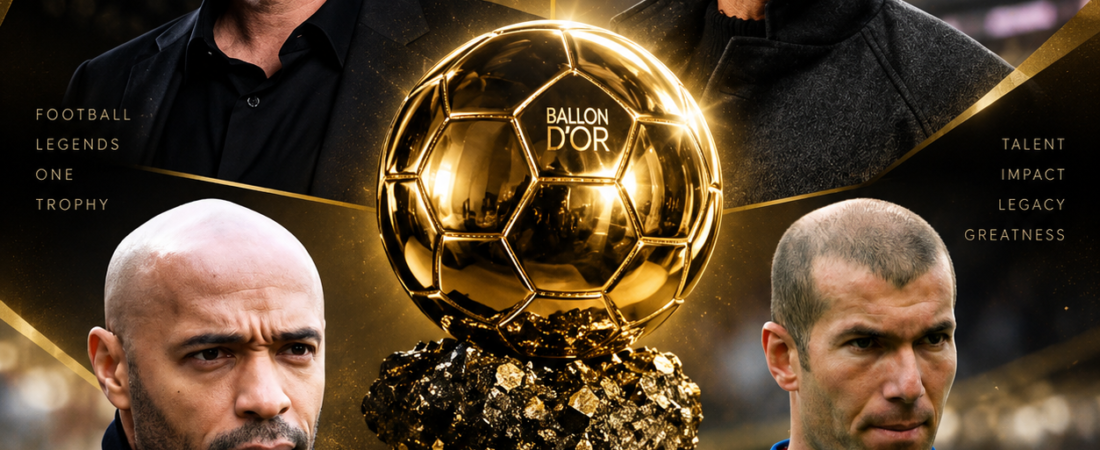

Zidane backs Messi. Henry and Mourinho favour Mbappé. Ferdinand and Lloris make the case for Kane. With the 30-man shortlist confirmed, the debate is no longer simply about who had the best season — but what the Ballon d’Or should actually reward.
The Ballon d’Or debate normally starts with numbers.
Goals. Assists. Trophies. Champions League performances. World Cup moments.
But this year, there is another way to look at the race: ask the people who have played, managed and competed at the highest level who they believe deserves the prize.
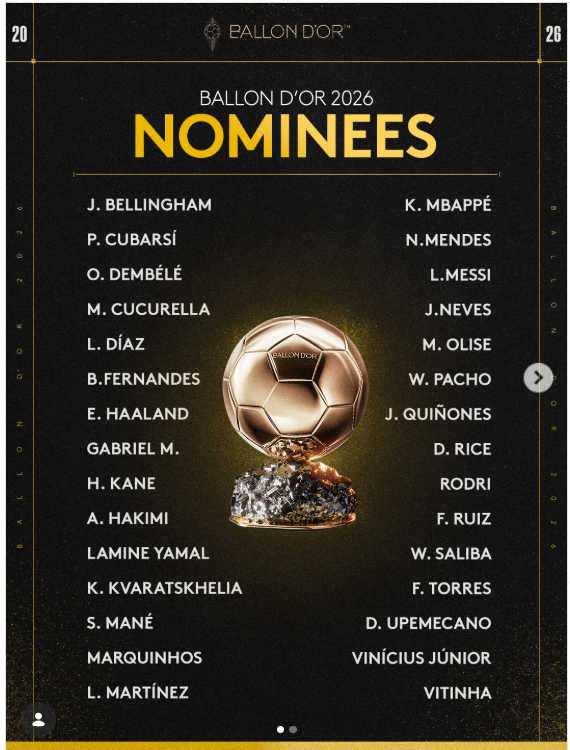
France Football has unveiled the 30-man shortlist for the 2026 award, with the ceremony scheduled for October 26 in London. Among the nominees are Lionel Messi, Kylian Mbappé, Harry Kane, Lamine Yamal, Rodri, Ousmane Dembélé, Michael Olise and Erling Haaland.
And some of football’s biggest names have already made their preferences known.
What makes their choices interesting is that they are not necessarily rewarding the same thing.
For some, it is individual brilliance. For others, goals and consistency. For others still, there is something harder to quantify: longevity, influence and the ability to remain exceptional when the pressure is greatest.
That makes the 2026 Ballon d’Or race as much a debate about what greatness means as it is about who should win.
Zidane still believes in Messi
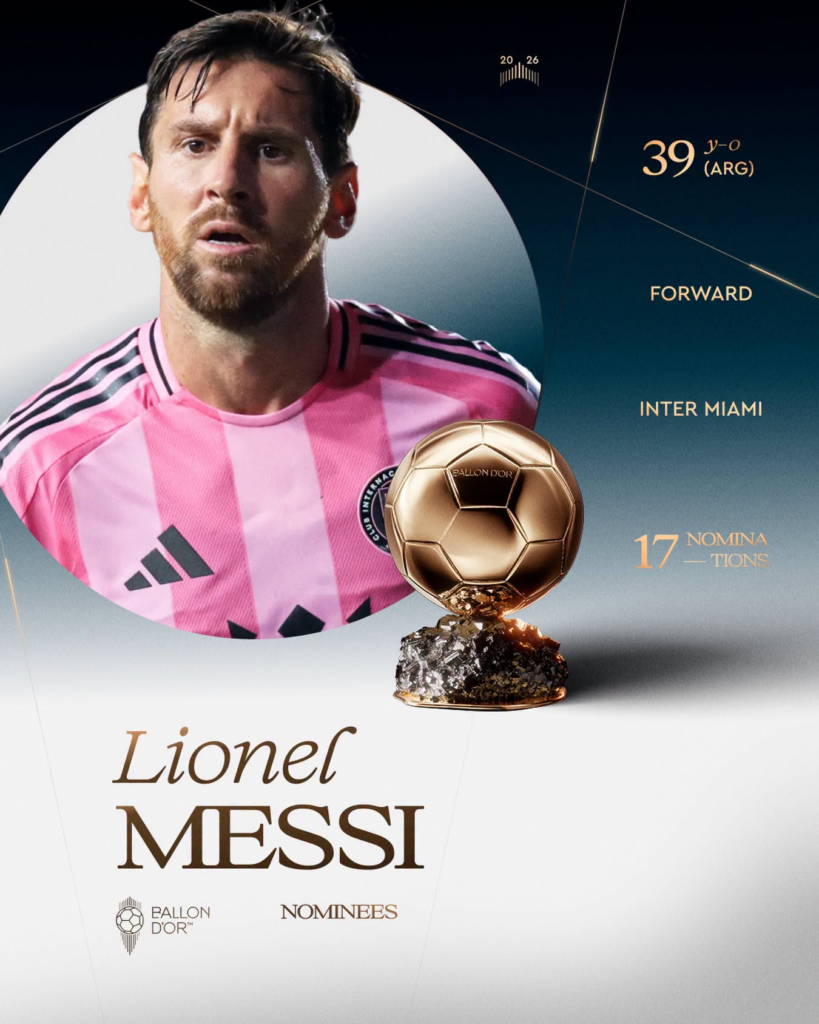
At 39, Lionel Messi should perhaps no longer be part of the conversation. Instead, he is right in the middle of it.
The eight-time winner has returned to the Ballon d’Or shortlist after another remarkable season with Inter Miami and Argentina. He registered 45 goals and 30 assists in 49 appearances, helped Inter Miami win the MLS title and guided Argentina to the World Cup final.
For Zinedine Zidane, age has not changed the equation.
The former France and Real Madrid great has backed Messi for the award, reportedly saying: “I would vote for Messi 100 times.” He also highlighted the extraordinary nature of Messi remaining among the world’s best players at 39.
Zidane’s choice is therefore about more than a single season.
It is an argument for sustained excellence — the idea that a player who continues to perform at an elite level deep into his career should not be discounted simply because younger stars have emerged.
Henry’s Mbappé argument is about the individual
Thierry Henry has taken a very different route.
His choice is Kylian Mbappé — and his argument cuts straight into one of the oldest Ballon d’Or debates: should the award primarily recognise the best individual player, or the player who won the biggest trophies?
Mbappé did not win the Champions League or the World Cup this season. But Henry believes that should not automatically rule him out.
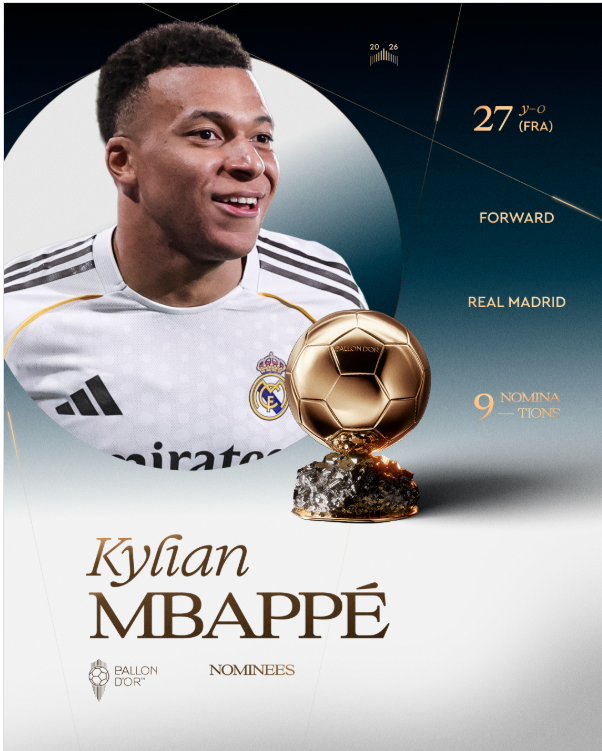
The Real Madrid forward finished as the leading scorer in La Liga, the Champions League and the 2026 World Cup, according to Henry, who pointed to those individual achievements when explaining his preference.
“Look at what he has accomplished individually.”
It is a straightforward philosophy: judge the player first, rather than allowing team honours to determine the winner automatically.
Mourinho makes the same case — but even more forcefully
José Mourinho has also backed Mbappé, and his argument is perhaps even more explicit.
The Real Madrid manager has rejected the idea that the Ballon d’Or should simply follow the winner of the Champions League or World Cup.
His view is that the award should identify the best footballer, not necessarily the player who happened to be part of the team that won the biggest competition.
“You cannot give the Ballon d’Or to a player simply because he won the Champions League or the World Cup,” Mourinho said.
For Mourinho, Mbappé’s individual achievements — particularly becoming the all-time leading scorer in World Cup history — make his case compelling.
Kane has the numbers, and the trophies
Then there is Harry Kane.
If the Ballon d’Or is judged by goals, consistency and team success, the England captain has perhaps the most straightforward case on the shortlist.
Kane scored 73 goals for club and country during the 2025–26 season and helped Bayern Munich win a domestic treble. He also led England to the World Cup semi-finals.
That combination has earned him powerful support. Former England captain Rio Ferdinand has been particularly emphatic.
After Kane received the European Golden Shoe, Ferdinand pointed to his extraordinary scoring record and his contribution to England’s World Cup campaign before asking:
“Who else should win the Ballon d’Or? Who else but Harry?”
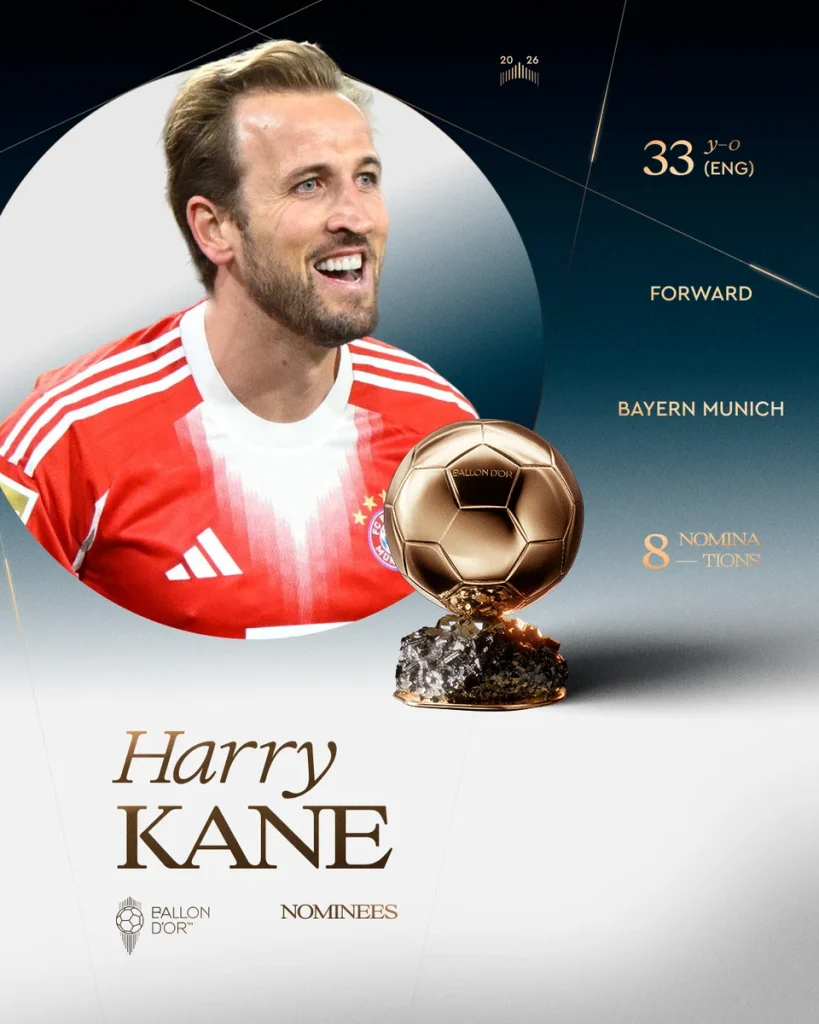
Former France and Tottenham goalkeeper Hugo Lloris has also backed Kane, arguing that the striker has developed into a player capable of winning the game’s biggest individual prize.
For Kane, the argument is difficult to dismiss.
He has the goals. He has the domestic trophies. He has the international production.
And, unlike some of his rivals, his case does not require voters to overlook a major weakness in his résumé.
Yamal represents the new generation
Then there is Lamine Yamal.
At 19, the Barcelona forward represents almost the opposite end of the spectrum from Messi.
Messi is still here because his brilliance has refused to fade.
Yamal is here because the next generation has arrived.
His 2025–26 season included 25 goals and 20 assists, while he helped Barcelona win La Liga and Spain win the World Cup. He finished second in the 2025 Ballon d’Or voting and is now among the leading contenders again.
Yamal’s case is not simply about potential anymore. It is about what he is already doing at the highest level.
The teenager has become a decisive player for both club and country, while his presence on this shortlist alongside Messi, Mbappé, Kane and other established stars underlines just how quickly his career has developed.
And that creates another question for voters:
Should a Ballon d’Or recognise the player who has been the best for years, or the player who has reached extraordinary heights during the season being judged?
Then there is the trophy argument
This is where the race becomes complicated.
Because if individual brilliance is the only measure, Mbappé and Messi have strong claims.
If goals and consistency are the priority, Kane is difficult to ignore.
But if the biggest team achievements matter most, the conversation changes.
Spain won the World Cup, with Rodri named the tournament’s best player. Paris Saint-Germain retained their dominance in Europe, winning the Champions League again, while Ousmane Dembélé enters the race as the reigning Ballon d’Or winner.
The 30-man list includes nine PSG players, reflecting the club’s extraordinary season and its continued dominance of European football.
Rodri, meanwhile, offers perhaps the strongest argument for the importance of international success. He was central to Spain’s World Cup triumph and was recognised as the tournament’s outstanding player.
And that creates an uncomfortable problem for the other candidates.
Can the best individual player really be separated from the player who delivered the biggest trophies?
The Ballon d’Or is really asking one question: Who was the best player in the world?
But “best” can mean very different things.
It can mean the most goals.
The most assists.
The biggest trophies.
The greatest individual performances.
The player who delivered when it mattered most.
Or simply the player whose level was impossible to ignore.