
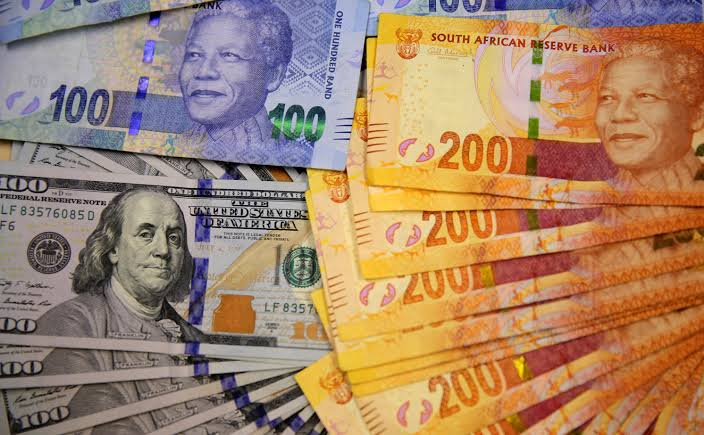

The South African rand fell sharply on Monday as renewed disruptions to oil supplies in the Middle East pushed crude prices higher and increased pressure on the currency.
The rand was trading at 16.2350 to the US dollar by 0815 GMT, about 0.6% weaker than its previous close. Later in the session, the currency had fallen by more than 1% to around 16.3175 per dollar.
The decline came as oil prices rose by about 3% following attacks on Saudi energy infrastructure and shipping in the Gulf, deepening concerns over global crude supplies.
South Africa is a net importer of oil, making the rand particularly vulnerable to a sustained rise in crude prices. Higher oil costs can increase the country’s import bill and put additional pressure on inflation and the broader economy.
Oil prices have risen sharply as the conflict in the Middle East threatens key energy infrastructure and shipping routes.
A drone attack on Saudi Arabia’s East-West oil pipeline forced the temporary shutdown of the strategic route, which can carry a significant share of the country’s crude exports and serves as an alternative to shipping oil through the Strait of Hormuz.
The disruption has raised concerns about global supplies, with the pipeline capable of handling volumes equivalent to roughly 4% of global oil supply.
Renewed security threats around Gulf shipping routes have added to those concerns, sending Brent crude above $108 a barrel on Monday.
For South Africa, higher energy costs could increase pressure on fuel prices and inflation, while also weakening investor sentiment towards the rand.
The currency market is also focused on the US Federal Reserve’s policy meeting on September 15-16.
Investors are looking for clues about the direction of US interest rates, with markets increasingly expecting the Fed to raise its benchmark rate by 25 basis points this week amid persistent inflation and higher energy prices.
The prospect of higher US rates can strengthen the dollar by making US assets more attractive to investors, potentially putting additional pressure on emerging-market currencies such as the rand.
The rand’s decline was accompanied by losses in South African financial markets.
The Johannesburg Stock Exchange’s Top-40 index was down about 1.2% in early trading, while the yield on South Africa’s benchmark 2035 government bond rose five basis points to 8.785%.
Gold, one of South Africa’s major export commodities, also fell, with the metal down 0.6% at $4,321.26 an ounce in early trading.
The combination of higher oil prices, weaker gold prices and uncertainty over US monetary policy has therefore created a challenging environment for the rand.
The currency’s performance in the coming days is likely to depend heavily on developments in the Middle East and the outcome of the Federal Reserve meeting.
A prolonged disruption to oil supplies could increase inflationary pressures and weaken the rand further, particularly if the resulting rise in prices prompts the Fed to maintain or increase interest rates.
Conversely, any easing of tensions or restoration of disrupted supply routes could reduce pressure on oil prices and provide some relief to emerging-market currencies.