
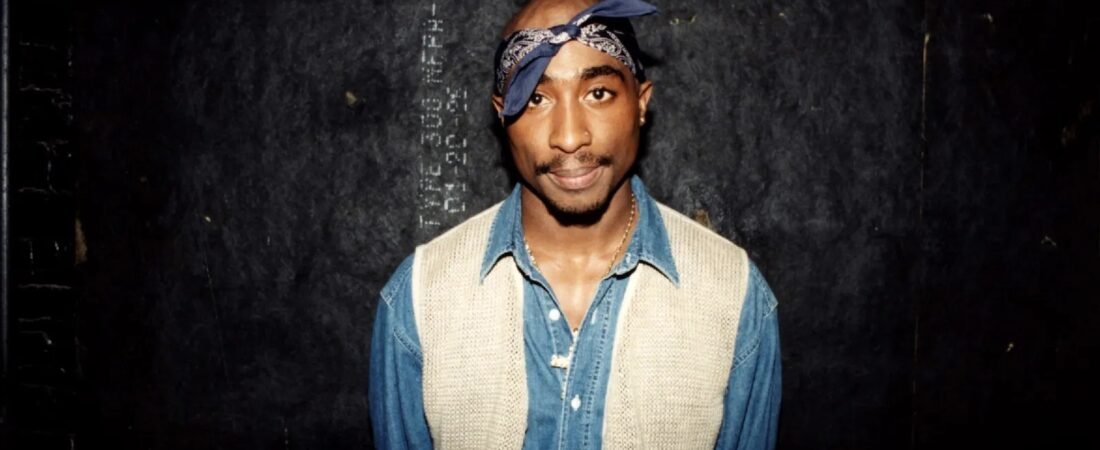

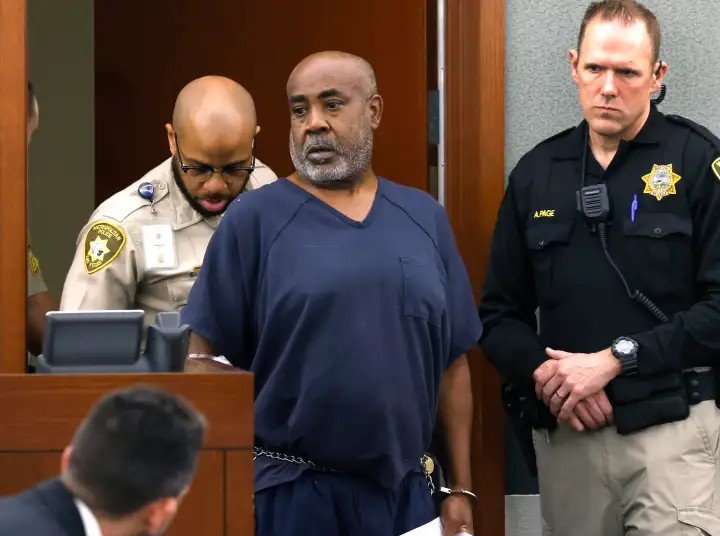
Duane “Keffe D” Davis has been found guilty of first-degree murder in the 1996 killing of rapper Tupac Shakur, bringing a nearly three-decade-old case to a close.
The 63-year-old former gang leader was convicted on Monday in Las Vegas, Nevada, after prosecutors argued that he orchestrated the shooting that killed Shakur, despite not being accused of pulling the trigger.
Davis was the only person ever charged in connection with Shakur’s murder. He was arrested and charged in 2023, 27 years after the rapper was shot in a drive-by attack near the Las Vegas Strip.
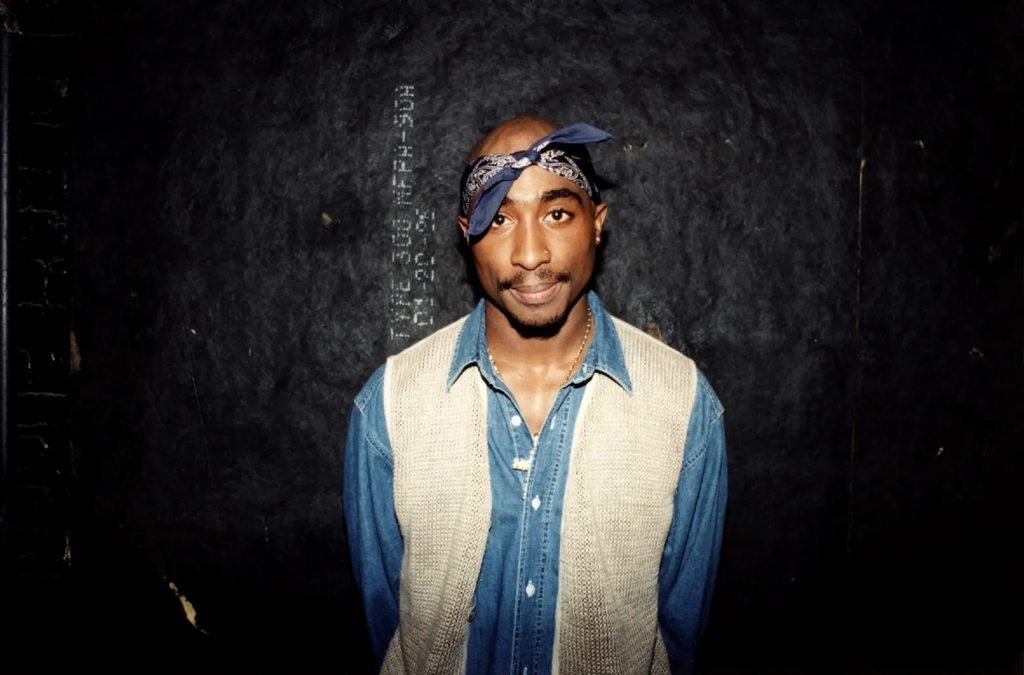
Shakur was 25 when he was shot multiple times on September 7, 1996, while riding in a car with Death Row Records co-founder Marion “Suge” Knight. Knight was also wounded in the attack but survived, while Shakur died six days later.
Prosecutors told the court that Davis, whom they described as a “shot caller” within the South Side Compton Crips gang, sought revenge after Shakur and Knight were involved in a fight with Davis’ nephew, Orlando “Baby Lane” Anderson, at the MGM Grand Hotel earlier that night.
Chief Deputy District Attorney Binu Palal argued in closing that Davis “went hunting” for Shakur and Knight following the confrontation.
Under Nevada law, a person can be convicted of murder if they help another person commit the crime, even if they did not fire the weapon.
A key part of the prosecution’s case was Davis’ 2019 memoir, Compton Street Legend, in which he described his involvement in the shooting and said he had provided the gun used to kill Shakur.
Prosecutors also relied on statements Davis made during a 2009 police interview and information he provided to federal investigators in 2008 while they were investigating the murder of rapper The Notorious B.I.G.
The prosecution argued that details Davis provided about the shooting, including the positions of people inside the vehicle and events involving rival gangs, could only have come from someone with knowledge of the killing.
The defence, however, argued that Davis had fabricated or exaggerated his accounts for money and publicity.
Defence attorney Michael Sanft also highlighted the lack of physical evidence directly connecting Davis to the shooting. He told jurors that investigators had failed to find receipts, phone records, photographs or other records proving Davis was in Las Vegas when Shakur was killed or that he supplied the murder weapon.
Sanft also challenged inconsistencies between Davis’ various accounts of the shooting.
The jury deliberated for only a few hours before returning the guilty verdict.
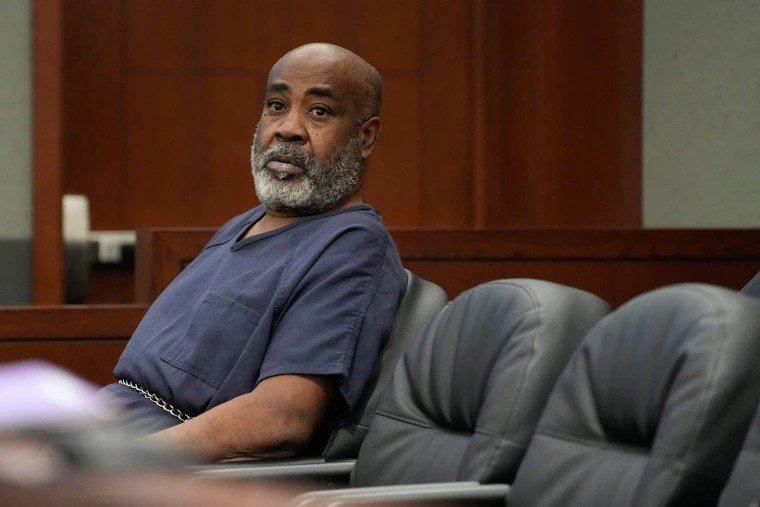
Davis stood silently beside his lawyers as the verdict was read. His son covered his face with one hand, while Shakur’s sister, Sekyiwa “Set” Shakur, cried in the courtroom.
District Judge Carli Kierny ordered Davis to remain in custody until his sentencing on October 13. He faces a possible life sentence without parole and has indicated that he intends to appeal.
Shakur’s killing had remained one of the most prominent unsolved cases in hip-hop history, with investigators spending years pursuing leads between Las Vegas and Compton, California.
Former law enforcement officers told the court that the investigation was repeatedly hampered by uncooperative witnesses, conflicting accounts and a culture of silence surrounding the rival gangs linked to the shooting.
Las Vegas detectives travelled to Southern California several times during the investigation but struggled to establish a clear connection between the events in Compton and the killing in Las Vegas.
Davis’ conviction now marks the first criminal verdict in a case that has remained unresolved since one of hip-hop’s most influential figures was killed nearly 30 years ago.