
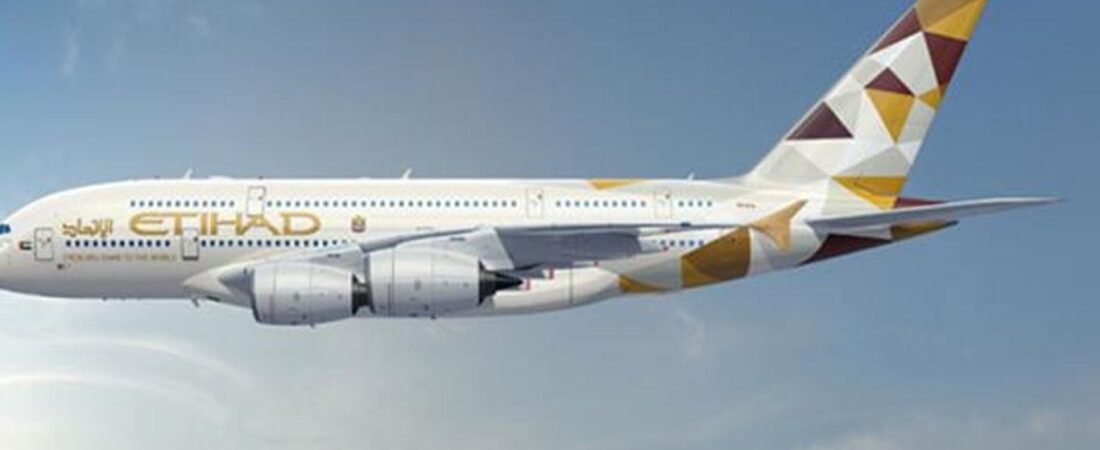

Abu Dhabi-based Etihad Airways says passenger demand has recovered strongly from disruptions caused by the Iran war, with the airline now operating significantly more capacity than a year ago and recording a 92% passenger load factor in August.
Etihad Chief Executive Antonoaldo Neves told Reuters on Monday that the airline’s Available Seat Kilometres (ASK) — a standard industry measure of passenger-carrying capacity — was 15% to 17% higher than a year earlier.
“We are back on track,” Neves said, describing current demand as exceptionally strong.
The airline expects demand to remain strong through the winter travel season, although travel patterns have shifted, with more passengers making bookings closer to their departure dates.
Etihad recorded a 92% load factor in August, meaning 92% of the available passenger seats were filled.
The airline is targeting a load factor of more than 87% for the rest of 2026, despite continued uncertainty in the Middle East and the wider global economy.
The strong recovery follows a difficult period earlier in the year, when the war involving the United States, Israel and Iran disrupted air travel across the Middle East.
Airspace closures in March and April forced airlines to cancel or reroute flights, while the conflict also contributed to a sharp increase in fuel prices.
Etihad expects its 2026 revenue to remain broadly flat compared with 2025, with profitability expected to be close to zero as the impact of those disruptions weighs on its full-year performance.
While passenger demand has recovered, higher fuel costs remain a significant risk for the airline.
Neves told Gulf News that jet fuel prices were currently his biggest concern, warning that sustained high prices could eventually put pressure on airfares.
The airline is partly protected through fuel hedging, but it remains exposed to movements in the oil market. Neves said current fuel prices were being driven by broader geopolitical developments and expected some of the pressure to ease.
For passengers, the concern is whether higher operating costs will eventually translate into more expensive tickets.
Neves said intense competition between airlines could make it difficult for carriers to pass the full increase in fuel costs on to customers.
Despite the disruption, Etihad is continuing to expand its network and fleet.
The airline has introduced new routes and increased capacity as it seeks to strengthen Abu Dhabi’s position as a global connecting hub.