
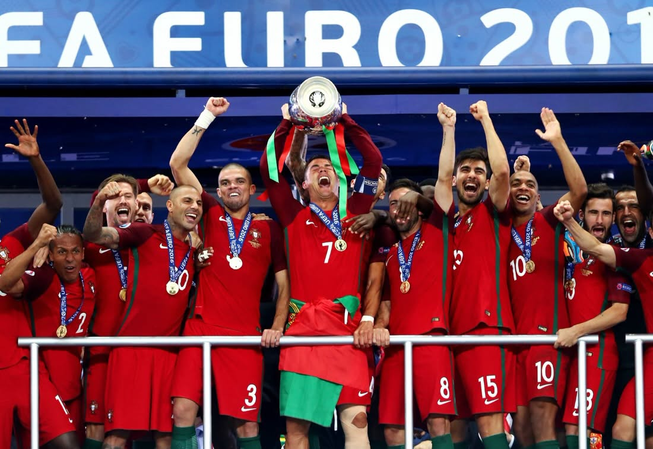

Cristiano Ronaldo’s sudden departure from Portugal’s training camp has turned what appeared to be a disagreement over playing time into a potentially serious disciplinary matter, one that could affect the final chapter of his international career.
Ronaldo left the team’s Copenhagen camp on Wednesday, September 30, shortly after Portugal coach Jorge Jesus addressed the controversy surrounding his treatment of the captain. The incident followed Portugal’s 2–1 win over Norway, in which Ronaldo remained an unused substitute for the first time in an international match since 2008.
Jesus had told reporters that Ronaldo was disappointed, but insisted there was no major conflict between them.
Jesus said he had spoken to Ronaldo before the Norway game and had told him he could come on for around 20 to 30 minutes if the match required him. But as the game developed, the coach decided against making the substitution.
Jesus later acknowledged that he had made a tactical decision not to bring Ronaldo on, while insisting that his decisions would not be dictated by any player regardless of status.
The manager subsequently said he did not understand why the situation had become such a major issue, maintaining that he and Ronaldo had already spoken and settled the matter.
But whatever had been resolved between the two men did not remain resolved for long.
Ronaldo subsequently held a conversation with Portuguese Football Federation (FPF) president Pedro Proença before deciding to leave the camp. Proença and Jesus reportedly went to the airport in an attempt to persuade him to stay, but Ronaldo left for Madrid.
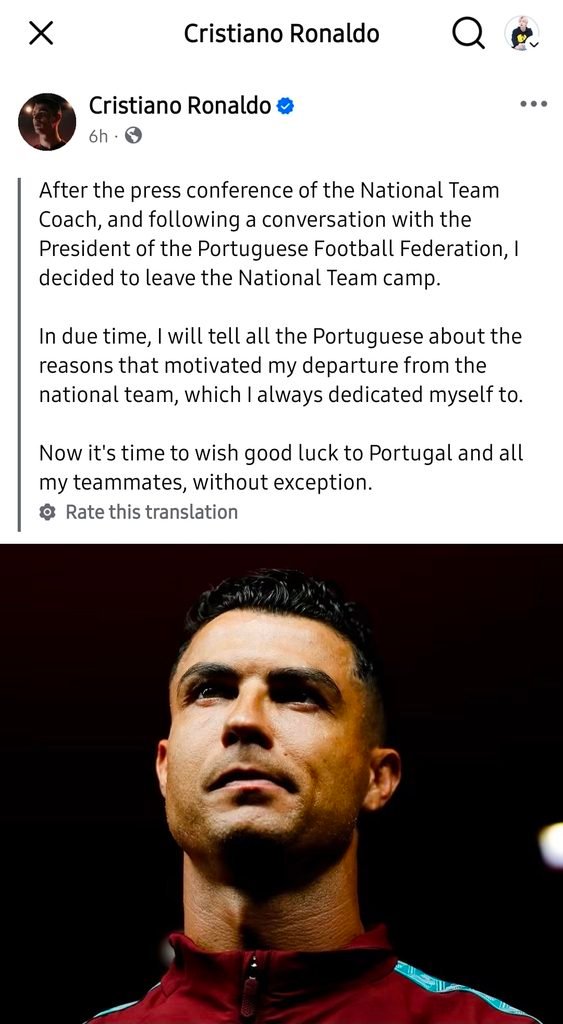
The FPF later confirmed his departure, while Ronaldo said he would explain the reasons behind his decision “in due time” and wished Portugal and his teammates well.
And that is where a bigger question begins.
Could leaving Portugal’s camp actually cost Ronaldo more than his place in one Nations League match?
The answer depends largely on how the Portuguese Football Federation treats his departure.
Under Article 160 of the FPF Disciplinary Regulations for the 2026/27 season, a player who has been regularly called up and unjustifiably leaves or fails to attend a national-team training session, match or other activity connected with representing the FPF or Portugal can be suspended for between one and six months.
A professional player can also receive a fine of five to 10 accounting units, currently equivalent to about €510 to €1,020. FPF
The regulation does not specifically create a special offence for “walking out during an ongoing competition”. Its wording is broader. The crucial issue is whether Ronaldo’s departure is ultimately deemed unjustified.
Article 160 also provides for an automatic preventive suspension following an absence or abandonment. That should not be confused with a final six-month punishment: six months is the top of the sanction range, not a punishment that has already been imposed on Ronaldo. FPF
There is also an important distinction between Ronaldo’s case and several famous football walkouts.
Portugal has been here before.
In 2011, defender Ricardo Carvalho abandoned Portugal’s training camp after falling out with coach Paulo Bento over his selection. The FPF subsequently banned him from the national team for one year. That case came under an older disciplinary framework, which allowed a punishment of up to 2 years, but the FPF specifically cited Carvalho’s sporting history when settling on a one-year ban.
Carvalho’s case is particularly interesting for Ronaldo because it shows two things at once: walking away from Portugal duty can result in a serious international punishment, but a player’s history can also enter the equation when the federation determines the sanction.
There is an even closer example involving Croatia’s Igor Bišćan. In 2003, Bišćan stormed out of Croatia’s training camp after discovering that he had not been included in the match squad. The Croatian Football Federation imposed a six-month ban, the maximum available under its disciplinary process at the time.
UEFA reported that the federation took the strongest view of the incident partly because Bišćan failed to provide an explanation for his departure.
These cases do not mean Ronaldo will receive a similar punishment. The circumstances, rules and disciplinary findings are different. But they demonstrate that national teams are not simply informal environments where star players can leave without consequences.
Then comes Ronaldo himself.
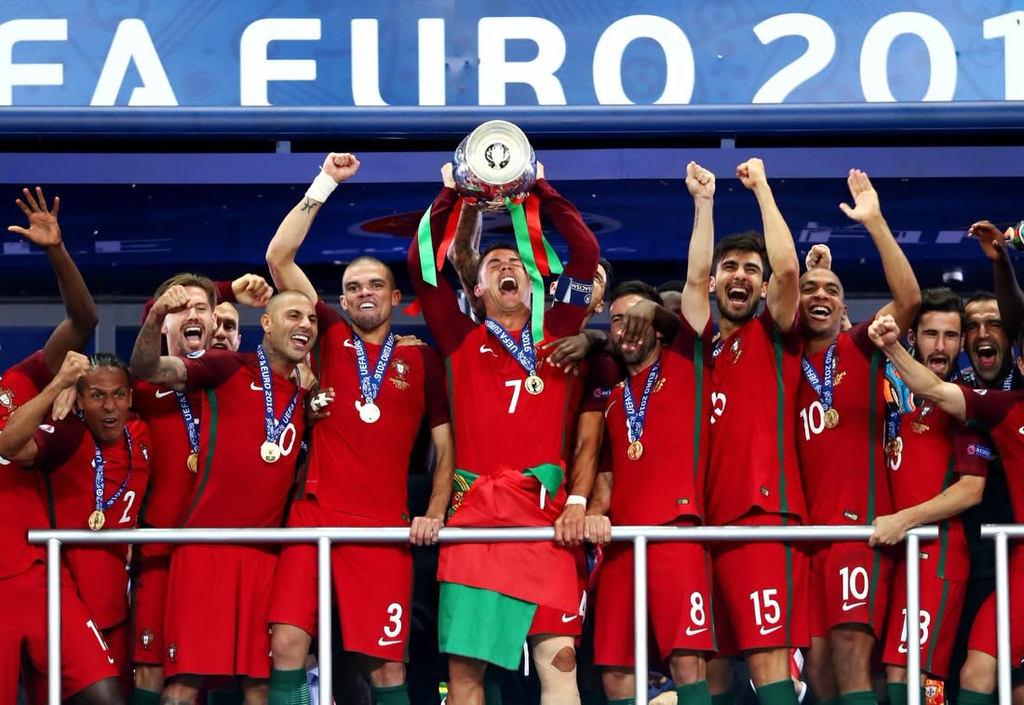
There is little question about his importance to Portugal’s history. Ronaldo is the country’s most-capped player and the world record-holder for international goals. By September 2026, he had made 234 appearances and scored 146 goals for Portugal, including winning Euro 2016 and becoming the first player to score at six different World Cup tournaments.
So, does all of that buy him protection?
Not exactly.
Article 160 contains no Cristiano Ronaldo clause. It does not exempt captains, record scorers, Ballon d’Or winners or players with decades of service to the national team.
There is, however, room for the circumstances surrounding an offence to matter. FPF disciplinary provisions allow factors such as a player’s previous conduct, the reasons behind the offence, subsequent conduct and relevant services to football or sporting merit to be considered when determining a sanction. FPF
That makes Ronaldo’s legacy potentially relevant but as a possible mitigating factor, not immunity.
His relationship with the FPF, his explanation for leaving, whether the federation accepts that explanation, and what happened in the conversations before his departure could therefore become more important than the fact that he is Cristiano Ronaldo.
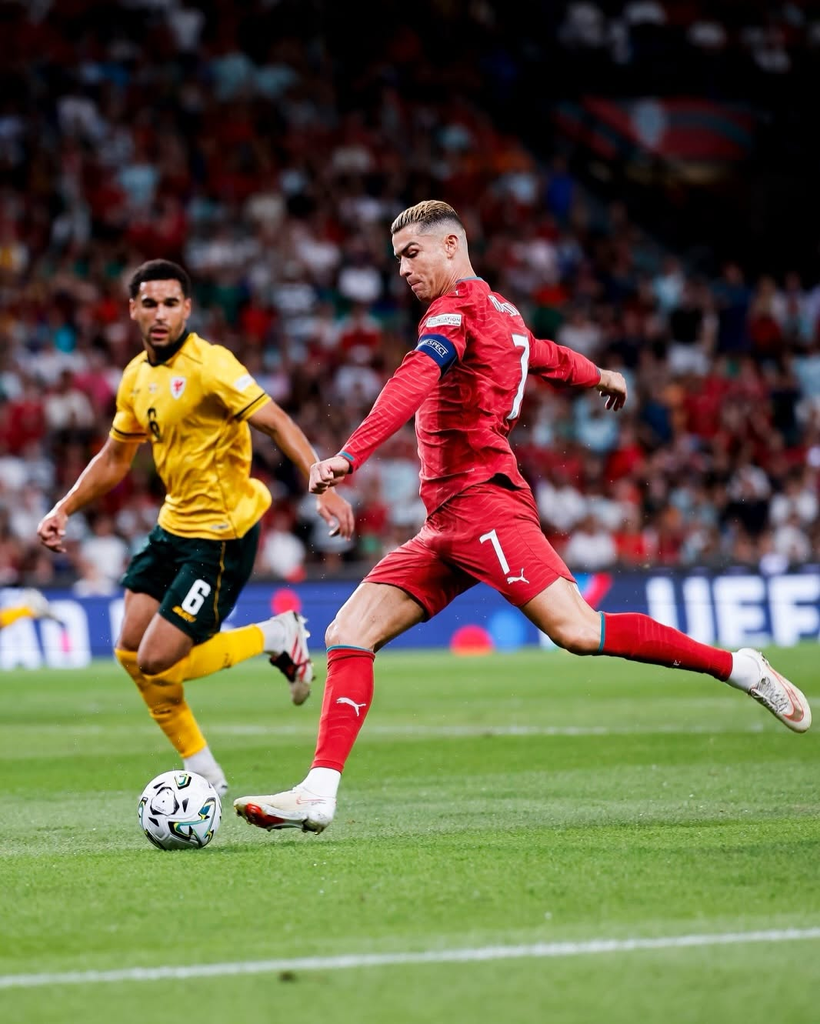
For now, Portugal have already shown they can move forward without him, beating Denmark 4–2 after his departure. But the football result does not settle the disciplinary question.
The bigger issue is now sitting with the federation: will Ronaldo’s walkout be treated as an understandable fallout between an ageing captain and a new coach, or as an unjustified abandonment of national-team duty under Article 160?
Ronaldo has promised that he will eventually tell his side of the story. The FPF has yet to announce a final disciplinary decision.
And until those two pieces of the puzzle are clear, the six-month figure remains the maximum punishment allowed by the rule not a sentence Ronaldo has already received.