
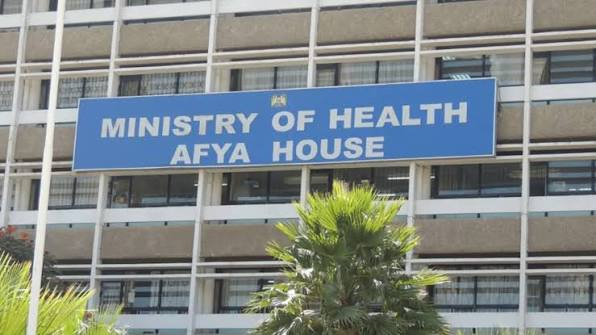

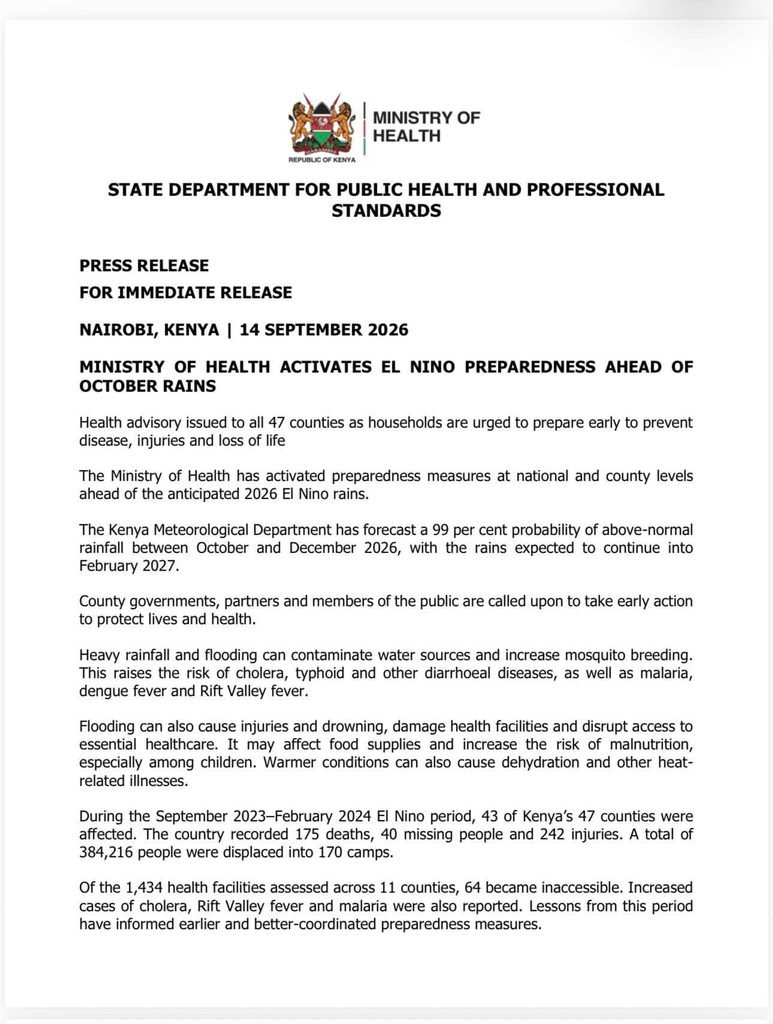
Kenya’s Ministry of Health has activated national and county-level preparedness measures ahead of above-normal rainfall expected from October to December 2026, with all 47 counties advised to strengthen their readiness for possible flooding, disease outbreaks and disruption to health services.
The Kenya Meteorological Department has forecast a 99% probability of above-normal rainfall during the October–December period, with the rains expected to continue into February 2027.
The Health Ministry has warned that heavy rainfall and flooding could contaminate water sources, increase mosquito breeding and raise the risk of cholera, typhoid, malaria, dengue fever and Rift Valley fever.
Flooding could also cause injuries and drowning, damage health facilities and disrupt access to essential healthcare. The ministry further warned of possible food shortages and increased malnutrition, particularly among children, as well as dehydration and other heat-related illnesses.
The advisory has been issued to all 47 county governments, with authorities expected to activate emergency coordination teams and public health emergency operations centres, protect health facilities at risk of flooding and ensure adequate supplies of medicines, vaccines and other essential items.
Counties have also been directed to strengthen disease surveillance, monitor drinking water safety, improve malaria prevention and mosquito control, prepare ambulances and referral services, and maintain essential healthcare for vulnerable groups.
The ministry identified Mandera, Wajir, Marsabit and Garissa in the North Eastern region; Kitui, Makueni and Machakos in the South Eastern region; and Lamu, Kilifi, Kwale, Tana River, Taita Taveta and Mombasa along the Coast among areas requiring particular attention.
Other areas flagged include the Kano Plains in Kisumu, Budalangi in Busia, the Tana Delta, and landslide-prone areas of Murang’a, Nyeri, Meru, the Gusii Highlands, West Pokot and the Rift Valley escarpment.
The ministry is coordinating preparedness through the National Public Health Emergency Operations Centre in collaboration with the Kenya Meteorological Department, National Disaster Operations Centre and partners including the World Health Organisation, UNICEF, World Food Programme and Kenya Red Cross Society.
The measures are informed by the previous El Niño period between September 2023 and February 2024, when 43 of Kenya’s 47 counties were affected. The period recorded 175 deaths, 40 missing people and 242 injuries, while 384,216 people were displaced into 170 camps.
An assessment of 1,434 health facilities across 11 counties during that period found that 64 became inaccessible, while increased cases of cholera, Rift Valley fever and malaria were also reported.