
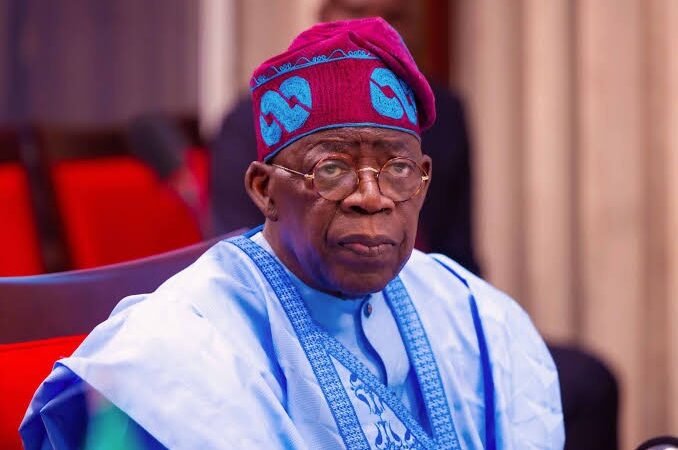

Nigerian President Bola Tinubu has asked a United States federal court to reject a request seeking the release of records held by the Federal Bureau of Investigation (FBI) and Drug Enforcement Administration (DEA) relating to past investigations involving him.
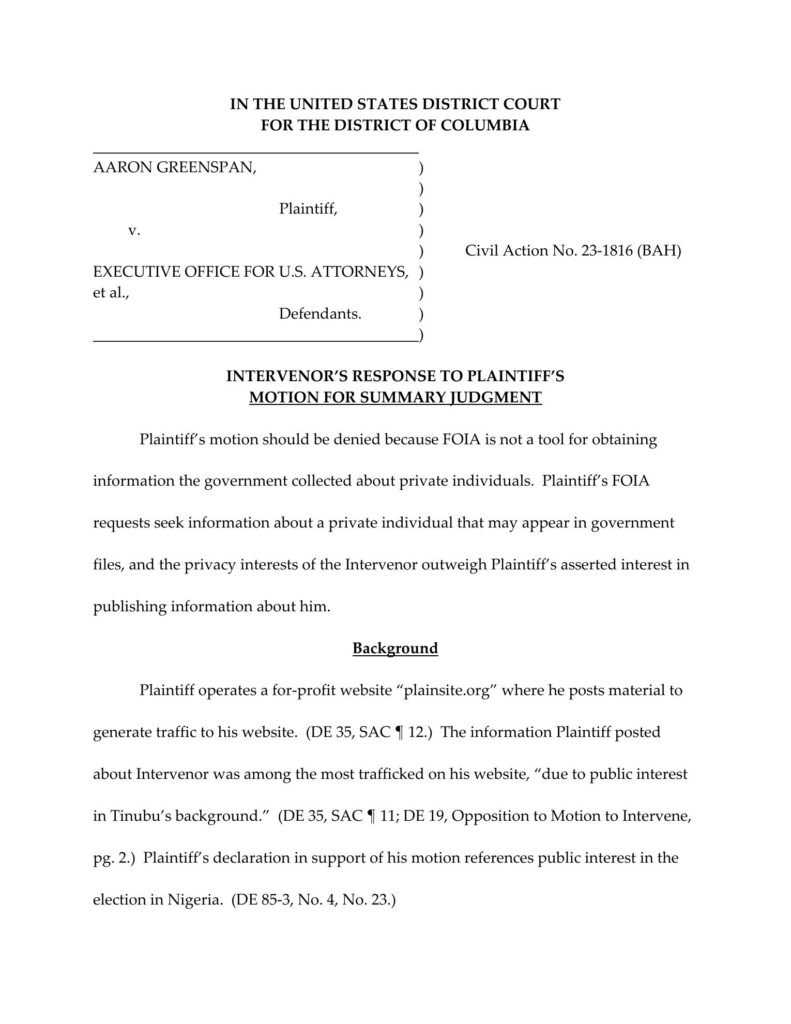
The President, who has joined the case as an intervenor, is asking the US District Court for the District of Columbia to allow the agencies to maintain redactions and withholdings in records already produced in response to a Freedom of Information Act (FOIA) lawsuit.
The case was brought by American transparency activist Aaron Greenspan, who has been seeking records concerning Tinubu from several US government agencies.
Among the records requested are the FBI’s entire file on Tinubu, interview records known as FBI Form 302 relating to 1992 and 1993, and documents connected to a 1993 US civil forfeiture proceeding involving approximately $460,000 allegedly linked to the Nigerian president.
Greenspan’s wider requests also sought records concerning alleged investigations into an international drug trafficking and money laundering operation in the early 1990s involving Tinubu and Abiodun Agbele.
The FBI and DEA initially declined to confirm or deny whether they held records concerning Tinubu, citing privacy exemptions under US FOIA law.
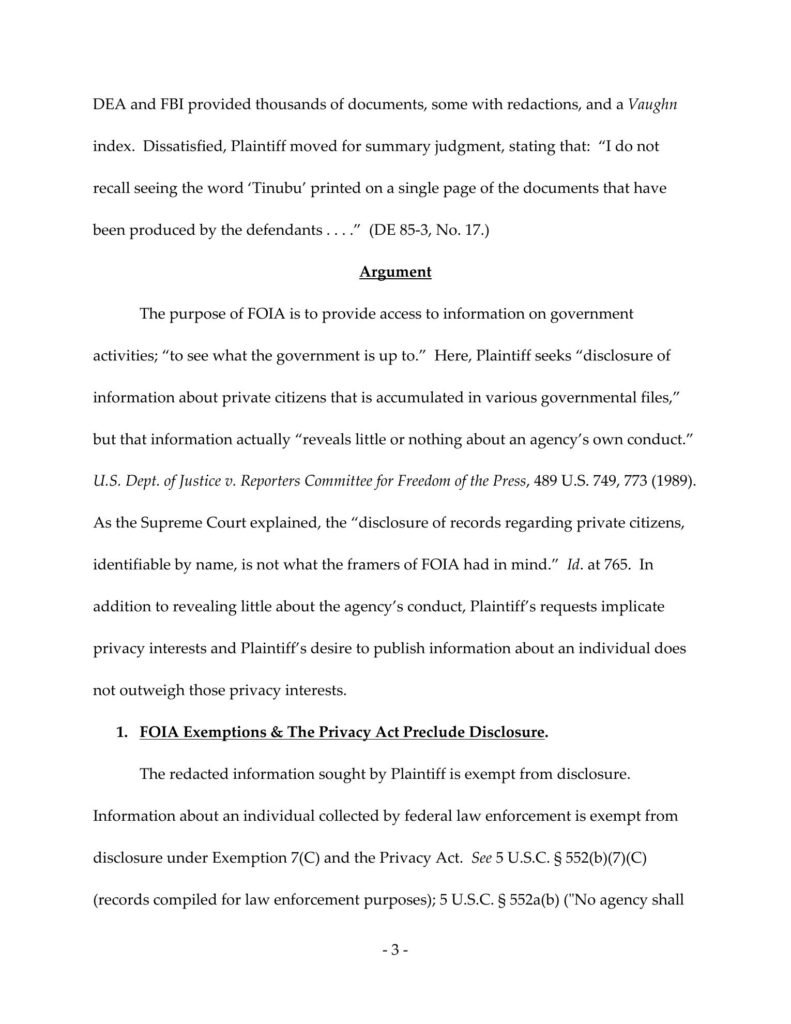
However, a federal court later ruled that the agencies could not rely on that response in the circumstances and directed them to search for and process records that were not exempt from disclosure. The agencies subsequently produced documents, some of which were redacted or withheld.
Greenspan has challenged the agencies’ handling of the requests and is seeking further disclosure.
It is at this stage that Tinubu’s legal team has stepped into the case, filing a 16-page response opposing Greenspan’s motion for summary judgment.
The lawyers argue that FOIA is intended to promote transparency about government activities and should not be used to obtain private information about individuals contained in government files. They are asking the court to allow the FBI and DEA to maintain the redactions and withholdings, relying particularly on privacy protections under FOIA Exemption 7(C) and the US Privacy Act.
The lawyers also argue that the fact that records may exist does not mean they should automatically be released, saying disclosure could constitute an unwarranted invasion of the President’s privacy.
Tinubu’s lawyer, Christopher Carmichael, has defended the decision to challenge the disclosure, saying the President acted on legal advice to preserve his rights in the US legal process.
“President Tinubu has the right to exercise his rights or waive them,” Carmichael told the BBC.
He said the decision to challenge the release should not be interpreted as an admission of wrongdoing.
The President has repeatedly denied involvement in drug trafficking and has maintained that he has never been convicted by a US court of a criminal offence.
The US court is now expected to determine whether the records sought by Greenspan can be released under FOIA or whether the privacy protections cited by Tinubu’s legal team justify keeping them redacted or withheld.